
Read the Kenosha County Current Owner Record Carefully
Kenosha County describes Property Inquiry as a source for tax-roll owner names and tax keys. It also covers property addresses, mailing addresses, assessment, sales and building data. That is a lot in one place. The exact owner label and card layout can still vary by record. Vesting belongs on the live deed. The table below separates what the county documents. It also flags fields that deserve a direct check on the record itself.
| Owner display | Tax-roll owner name; exact public field label not confirmed |
|---|---|
| Vesting name | Read the party and capacity on the recorded deed |
| Mailing address | Destination for tax notices; can differ from the situs |
| Situs address | Location associated with the parcel |
| Tax key | Parcel cross-reference for tax, GIS and deed research |
| Latest transfer | Confirm date and grantee in the recorded instrument |
An owner and an occupant differ. The tax roll names the person or entity attached to the bill. Their mailing address is a notice destination. It can guide property correspondence. It does not prove that anyone lives at the parcel or personally holds title.
For any current-owner question, keep three details together: the parcel key, the date of the assessor lookup and the deed's recording reference. The tax display identifies who owes the bill. The deed documents the transfer itself. An unfamiliar name warrants a closer read, never an inference about occupancy or family relationships drawn from an address alone.
Property Inquiry Starts the Kenosha County Owner Check
Kenosha County upgraded Property Inquiry in December 2024. Guests can now sign in and search by address or parcel. A Taxes tab shows current and delinquent balances. The portal also carries assessment, sales and building data. The entry screen is a plain guest sign-in page rather than a full owner card. Use the live result to note the tax key and displayed owner. Then confirm who acquired the land through LandShark. That deed check closes the loop on any transfer.
The Property Inquiry guest entry is the official starting screen for a county parcel search. It asks for an address or parcel before any record appears.
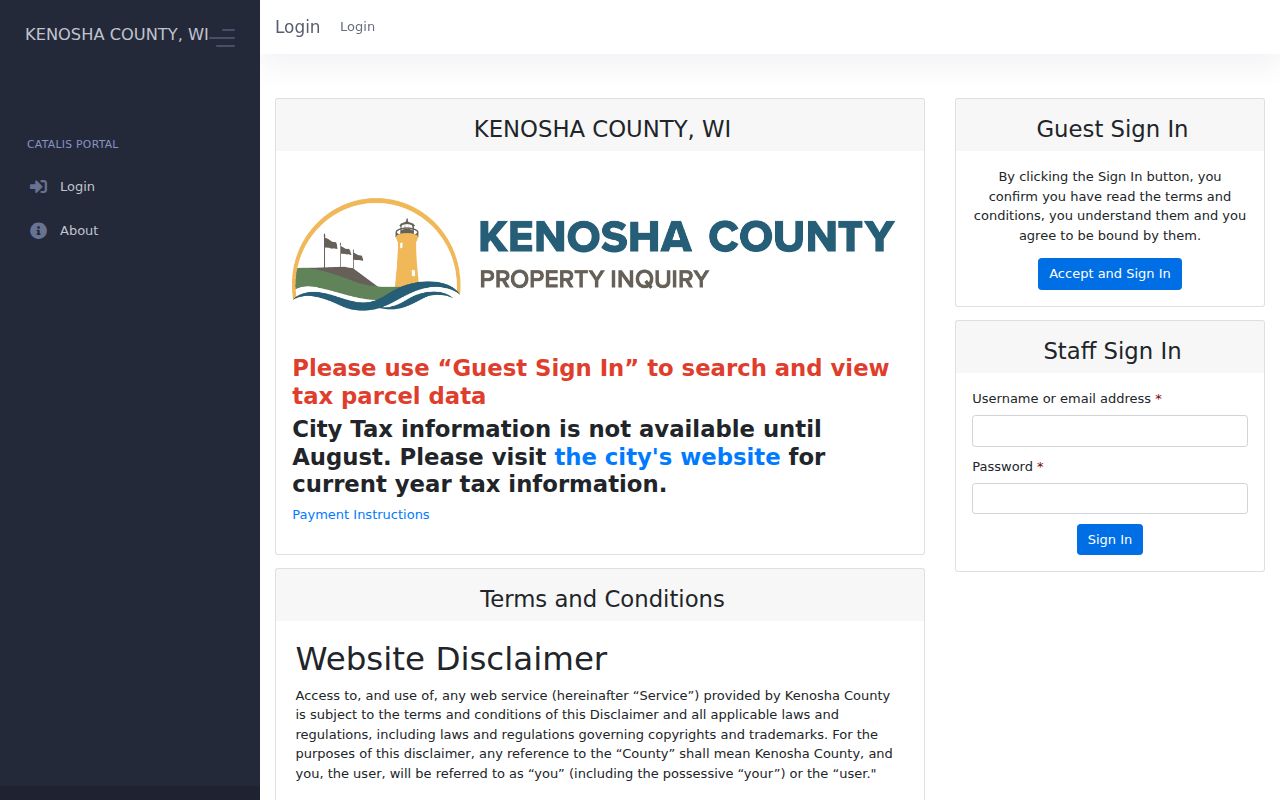
Log the lookup date beside the tax key. This separates a stale roll from a newer deed. The December 2024 update opened guest access by address or parcel. It also added the Taxes tab for current and delinquent amounts. Those entry steps reach the parcel record quickly. They do not reveal every owner-card field, so read the live result itself. Carry the key into the Register of Deeds index. Compare the latest filing before trusting the roll display alone.
Kenosha County Owner and Mailing Fields Are Different
The situs address shows where the parcel sits. The mailing address tells the treasurer where to send a tax notice. Kenosha County's FAQ warns that an outdated mailing address can delay notices. Record the two fields separately.
The fields may name entirely different places. A mailing address outside Kenosha County does not change the parcel's assessor or zoning jurisdiction. Verify the municipality in GIS and the assessor assignment list. If a notice goes to an old destination, the office listed on the bill can correct the mailing record.
Confirm the Kenosha County Current Owner in the Deed
The tax roll shows the current owner. The recorded conveyance lives with the Register of Deeds. LandShark serves as the county's online deed access. The service publishes no clear list of search fields, cutoff year or image price. Trace a recent transfer by deed reference, or by the parties and legal description, then compare it with the assessor display.
- Read the current tax-roll owner and tax key in Property Inquiry.
- Search LandShark or ask the Register of Deeds for the latest conveyance.
- Compare grantor, grantee and legal description with the same parcel.
- Note when the roll was viewed and ask the assessor about a mismatch.
- Owner of record
- The party named by the tax roll or recorded deed at a given date.
- Vesting
- The capacity or form in which an interest is held, shown in the deed.
- Registered agent
- A business contact listed in state entity records, not a substitute for the parcel deed.
Use the deed's grantee and vesting words exactly as written. Note any signing capacity, such as trustee or executor. A business officer can sign for an entity without taking title personally. An estate representative acts in a fiduciary role. The title effect depends on the filed instrument. Compare the whole document, the tax key and the legal description instead of trusting a shortened name in a search result.
Kenosha County Parcel Updates Do Not Set the Deed Lag
Kenosha County updates its Property Inquiry tool nightly when parcel numbers change. That is the only nightly refresh it promises. The county FAQ sets no clock here. It promises nothing between a deed's recording and the new owner appearing on the assessment roll. A freshly split child parcel can appear the next morning. A just-recorded sale may not. It can still require a separate check in LandShark.
Say the tax roll still names a prior owner. Compare that entry against the newest recorded deed. Then ask the assessor about the office's refresh cycle. The nightly parcel-number update is not a promise that owner names refresh each night.
Timing matters when a conveyance is in dispute. Note the deed's filing date and the date of your assessor lookup. That gap is a cue, not an answer. Ask the municipal assessor which update process applies to the parcel. The filed deed remains the authority for the conveyance itself.
Entity Vesting Can Change the Kenosha County Owner Name
Not every owner of record is a person. The grantee on a Kenosha County deed may be a trust, a limited-liability company, an estate, or an individual. Search the full vesting name as written. Wisconsin's DFI Corporate Records Search can surface a registered business name and its filing history. It cannot list every property an entity owns.
Probate records can explain an executor or administrator deed when land passes through an estate. Compare the signer's capacity, the grantee, and the parcel. A company officer or registered agent may sign without owning anything personally. The officer is not always the owner. WCCA posts case summaries, while the circuit court clerk holds the complete file.
The Kenosha County Assessor Assignment Depends on Municipality
Assessment in Kenosha County is local, not countywide. The City of Kenosha Assessor handles city parcels. Pleasant Prairie belongs to an assessing consortium. Associated Appraisal Consultants serves several towns and villages. Check the county assessor assignment list before raising a tax-roll name or a correction. A mailing's postal city can cross a municipal line, so it should never decide which office keeps the current owner roll.
Addresses near a boundary call for the map and the assignment list together, whether in Kenosha, Pleasant Prairie, Somers, or another municipality. For a recent transfer, use the recorded deed. It is the one common county source.
The City of Kenosha assessor sits at 625 52nd Street, Room 107, reachable at 262-653-4480 on weekdays from 8:00 a.m. to 4:30 p.m. Elsewhere, consult the county assignment directory first. Sending an owner correction to the wrong municipal office only delays it.
Use Kenosha County Owner Records for Property Matters
A public mailing address on the tax bill can support a property-related notice or contact. It does not reveal who occupies a home. Wisconsin Safe at Home gives eligible survivors and protected participants a substitute address. Anyone in that program should contact the custodian rather than expose a protected location. Handle personal details with care. Never republish sensitive identifiers from a deed.
Lawful use. Use these records for property research, tax matters and title questions. Do not use a name or address to track, threaten or harass a person.