
Run a Kenosha County Property Search from the Best Clue
The county FAQ lays out three practical starting points. A full address is easiest for a house. A parcel or tax key is the strongest match once you have it. An owner name can help Land Information staff locate a key. Pair the name with the street and the spelling printed on the tax bill. Both Property Inquiry and Interactive Mapping accept address or parcel searches. The City of Kenosha assessment site adds two more modes. One is a structured address search. The other is an address-range search.
Jot down the parcel key and situs address. Note the municipality too. That small record helps you catch a nearby parcel with a similar street number. It can also flag a city label tied to a different taxing body. Treat the property search as a routing step. Move on to LandShark for recorded instruments. Use the tax tab for a bill. Open the GIS viewer for location context.
- Enter the full address in Property Inquiry or Interactive Mapping.
- Copy the tax key and note the municipality, situs and mailing address separately.
- Use the key in LandShark research or ask the Register of Deeds about an instrument.
- Open the tax view for balance details and the map for parcel context.
- Request an office copy if a needed deed image or historic index is not available online.
City Search Fields Refine a Kenosha County Property Search
The City of Kenosha runs its own assessment portal. It gives a county address lookup a useful second path. Lookups can run by parcel number, house number, street name, or street type. Address-range fields are there too, marking the start and end of a block. Each search mode sits beside its own control. Remember that this is an assessment tool, not a deed index; for a parcel outside the city, confirm coverage with the county assessor assignment page.
| Search mode | Fields shown | When to use it | Check |
|---|---|---|---|
| Parcel | Parcel number | Known tax key or parcel reference | Keep all digits and hyphens |
| Single address | House number, street name, street type | One City of Kenosha situs | Use the right street type |
| Address range | Start and end house numbers | Block or street segment | Confirm each returned parcel |
The City assessment search is where those lookup choices live. The official page shows where a parcel search or an address-range search begins.
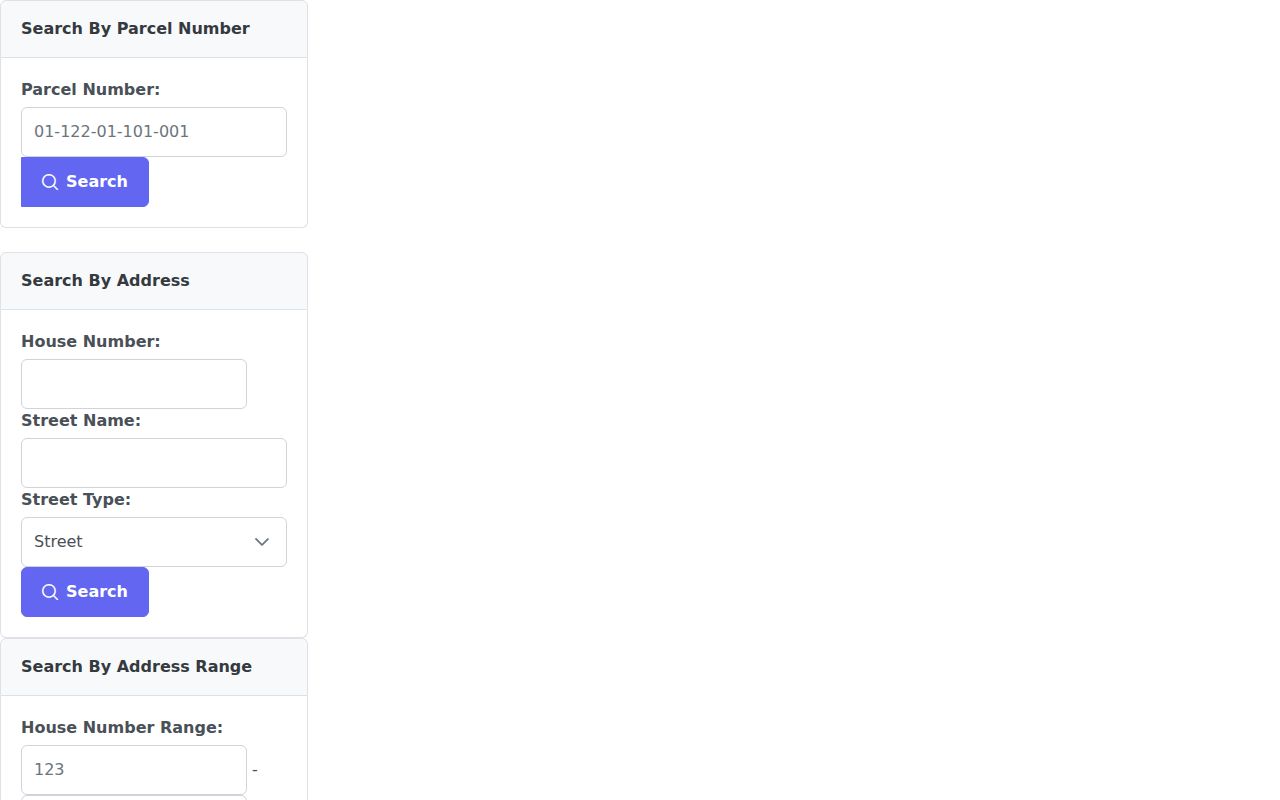
Keep the municipal parcel number in hand. Compare it against the county map and tax system. Do this before following any deed reference. The single-address fields work best when you know the house number. Street name and street type finish the entry. Range fields fit block-level questions. Think of listing every parcel along one stretch of street. They cannot replace checking each returned parcel separately. The parcel key is the reliable tiebreaker. It settles cases where one address carries more than one tax lot.
This portal is the City of Kenosha assessment search, nothing broader. A Kenosha mailing address alone does not put a parcel inside city limits. For property outside the city, the county's assessor assignment list names its municipal assessment office. Keep the returned tax key attached to the address as you move between systems.
Guest Entry Opens Kenosha County Property Search
Kenosha County announced a Property Inquiry upgrade on December 12, 2024. The instructions are simple. Pick Guest sign in, then search by address or parcel. Open the Taxes tab to view, print or pay current and delinquent property taxes. Property Inquiry also carries assessment, sales and building data. No owner-name search field appears on the public side. So do not expect a typed name to return every parcel.
Need an owner-name clue instead? Start from the spelling on the tax bill. Ask Land Information for the tax key along with the street. The owner line is not a people index. The county release reports a 3 percent credit-card fee for online payment. It also lists a $1.50 e-check fee. A printed record can answer a balance question without paying online.
The guest route suits one goal: identifying a parcel and inspecting its tax information. It is not a complete public index of a person's holdings. When an address gives no confident match, go back to the bill or map. Copy the tax key rather than guessing at spellings. Record each search result alongside the date you viewed it. Tax figures can shift after a payment, a correction, or a new assessment.
The Property Inquiry guest sign-in is the county's access point for parcel and tax information. It shows the entry screen only, not a particular owner's account.
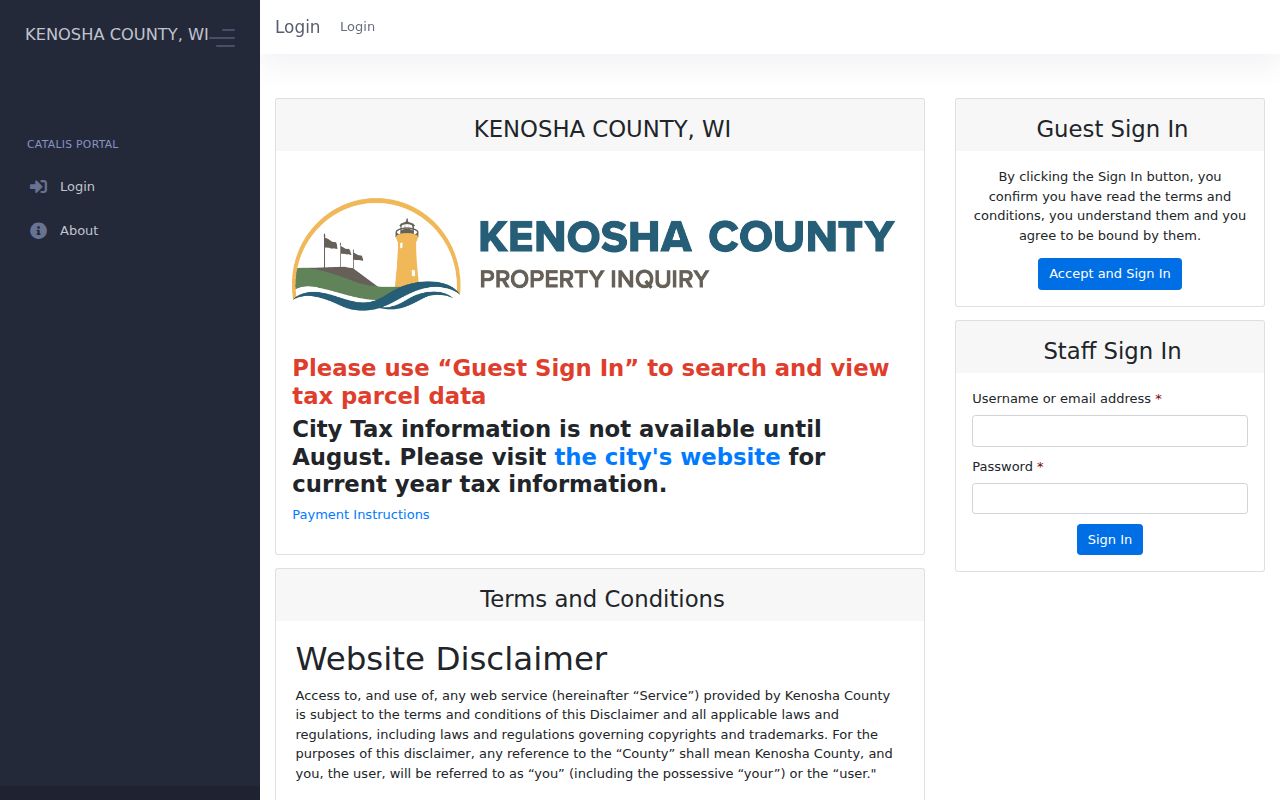
Use the tax key from a successful result as the cross-reference for later searches.
Read the Kenosha County Property Search Result by Field
A Kenosha County property search result is a parcel summary, not a full title file. The county's Property Inquiry system lays out the essentials on one screen. You get the owner of record and the site address. The tax key for the parcel appears there too. Assessment figures, building details, and sales history sit alongside those basics. A Taxes tab pulls the tax bill and tax roll entries together.
Note: Field names and sketch or value-history details can vary by parcel, so treat the layout as a map of what the county documents rather than a promise of every field on every card.
| Owner display | Tax-roll name; confirm recent changes in the recorded deed |
|---|---|
| Situs and mailing | Parcel location and tax-notice destination are separate clues |
| Tax key | Parcel identifier used across tax and map research |
| Assessment and sales | Values and sales data described by the county portal |
| Building data | Property characteristics described in the county record gateway |
| Taxes tab | Current and delinquent tax amounts; printable information |
Kenosha County's own FAQ splits two things apart. Register of Deeds sale information and Property Inquiry parcel counts come from different systems. A summary's sale date or amount never replaces the recorded transfer, and an owner display can lag behind a recorded instrument. Legal descriptions, recorded documents and surveys answer different questions. The tax card answers yet another one. When sources disagree, keep both sets of details and ask the custodian which record controls.
Read the situs address as the parcel's location. The mailing address is only where notices go. The two can differ without any data error. Assessment figures belong to the assigned municipal roll, while the Taxes tab covers amounts and tax years. Building characteristics describe the property record, but they do not certify construction, code compliance or a survey boundary. Note which system produced each fact, so a value or a name is never mistaken for a deed statement.
Keep Kenosha County Parcel Keys in Their Local Format
Kenosha County map materials show several number shapes. A city parcel may look like `12-223-31-438-001`. A village example runs `37-4-121-053-0405`, and another City search uses `01-122-01-101-001`. Keep every zero and every hyphen when you carry a key between systems. Maps also carry subdivision lot labels or street grid text; those help as context but never replace the parcel identifier.
The key is not always known. The county FAQ describes recovery by full address, by house number and street, or by street plus the owner name as printed on the tax bill. A fresh split can hide a child parcel at first. The FAQ says parcel-number data updates nightly. Watch the parent key. That timing note covers parcel-number changes only, not a known deed-to-roll ownership delay on the tax roll.
Carry a Kenosha County Property Search into GIS
Interactive Mapping accepts a House # and Street or a Parcel #. Its identify tool reveals map-feature details. Measure and print tools support a quick reference map. Survey, septic-system and street-view displays work as optional layers. If an address will not resolve, try the tax key from Property Inquiry instead of guessing at punctuation.
For questions about a surrounding area, the viewer offers a buffer workflow with a selection layer, a buffer layer, a distance in feet, feature selection and start or clear controls. Results cap at 1,000, so a broad buffer can come back incomplete. A GIS result puts a parcel on the map. It proves neither an exact boundary nor title. The full map-layer list appears on the Kenosha County parcel maps page.
Owner Names Need a Parcel Check in Kenosha County
Owner-name searching works well for a business, an estate or a trust. The legal vesting name has to be known first. The county landing page does not confirm that guests get a name field. An assessor or Land Information staff member may pair an owner name with a street. That can recover the key. Search the name exactly as the tax bill prints it. Then verify that the returned parcel carries the right situs address.
Names shift over time. A transfer, an estate administration or an entity filing can all change the vesting name. A same-name match may point to another person entirely. It may even point to another property. To identify a deed grantee, rely on the recorded instrument and the legal description. A parcel split may be new. Recheck the parent key after the county's nightly update. Do not assume no child parcel exists.
Keep the exact search input when a result seems off. Keep the value the system returned, too. Replacing either with a guessed abbreviation only muddies the trail. Kenosha key examples use leading zeroes and hyphens. The City assessment search, meanwhile, splits street name and street type into different fields. A good search note records the date, the municipal label, the situs, the mailing destination and the tax key. That lets another office reproduce the lookup and spot a mismatch.
Give staff both pieces up front. That means the street and the name printed on the tax bill. Say whether the goal is a parcel key, current tax status or a recorded conveyance. Assessor and Land Information offices keep different records. For transfers, the Register of Deeds record comes next. For the bill, use the correct municipal treasurer or the County Treasurer depending on the tax year.
Choose the Right Key for a Kenosha County Property Search
Address, owner and parcel searches are not equally strong. An address is easy to remember. An owner name may require staff assistance, while a tax key serves as the exact cross-reference between systems. Change the key when one search returns several results or none. Hold the municipality constant while you switch. When the address has changed, or the instrument uses lot and block instead of a street address, the legal description is the next step.
| Search Key | Best For | Where It Works | Watch Out |
|---|---|---|---|
| Address | One known situs | Property Inquiry, GIS, City assessment search | Use street type and municipality |
| Owner name | Staff-assisted tax-key recovery | Land Information or assessor route | Exact public field is unconfirmed |
| Tax key | Exact parcel cross-reference | Property Inquiry, GIS, LandShark | Retain every zero and hyphen |
Not a title search. A Kenosha County property search can locate tax and parcel records, but it does not establish clear title or a surveyed boundary. Use the recorded deed, a title professional or a licensed surveyor for those questions.