
What a Kenosha County Deed Records Entry Can Show
The Register of Deeds records instruments against land in Kenosha County. Deeds are only one family. Mortgages, releases, satisfactions, assignments, liens, easements, plats, certified survey maps and transfer returns all appear in the index too. A deed conveys whatever interest its own terms describe. Its label alone never proves the title is clean. Read the legal description, parties and recording reference together, then compare them with the tax key in Property Inquiry or on the map.
| Deed Type | What It Does | Common Use |
|---|---|---|
| Warranty deed | Conveys the grantor's stated interest with deed covenants | Common conveyance in a sale |
| Quitclaim deed | Transfers whatever interest the grantor holds | Family or title cleanup |
| Trustee or executor deed | Conveys land through a fiduciary | Estate or trust administration |
| Transfer return | Records transfer-related information | Filed with a conveyance |
| Mortgage or release | Creates, assigns or clears a recorded security interest | Financing and payoff |
A mortgage is not an ownership deed. An assignment changes the named creditor. A satisfaction or release clears the lien later on. A recorded document proves only what was filed, not a title opinion on other interests. Other filings matter to a Kenosha County property question without conveying anything. An easement records a right that affects the land, such as access or utility use. A plat or certified survey map organizes lots and boundaries for reference. A transfer return belongs to the conveyance family. But the deed remains the instrument to read for its stated parties and land description. Treat search results as an index to documents. Read the instrument itself rather than accept a substitute.
LandShark Is the Kenosha County Deed Records Gateway
Kenosha County's Property and Taxes page points to LandShark for searching land records. The portal runs under county contracts. Its login indicates account or subscription terms. The public pages publish no grantor or grantee labels, document-type menu, online cutoff year or exact deed-image cost. Borrow nothing from another county's system. Start with the current tax key. An owner name or legal description also works. Confirm how LandShark accepts your reference. If a result will not appear, or the image is unavailable, contact the Register of Deeds at 1010 56th Street in Kenosha. Older books and indexes stay with the office, since the county publishes no earliest online year.
Copy and Search Charges for Kenosha County Deed Records
The Register of Deeds copy request form separates a document copy from search work and certification. Posted amounts give a rough cost estimate. Confirm the current schedule before ordering. Identify the document first. The form asks for a requester name and mailing address, and it accepts document numbers, owner, property address or legal description.
| Service | Posted charge | What to provide |
|---|---|---|
| First document page | $2 | Document reference or party/property details |
| Each added page | $1 | Number of pages requested |
| Plat page | $3 | Plat reference |
| Computer screen print | $1 | Search or parcel reference |
| Search assistance | $5 | Owner, address or legal description clues |
| Certification | $1 | Document to certify |
These figures are county form amounts. They say nothing about a third-party portal charge. The online image price is not published, and the clerk may need a clearer description before a manual search can begin. The schedule also lists $2 per UCC page. That category sits apart from the real-estate copy rates. Wisconsin's Public Records Law, Wis. Stat. §§ 19.31–19.39, backs access to records held by public authorities and permits reproduction costs. No fixed response deadline applies to a local request. Give the Register of Deeds a usable reference. Then confirm the current amount and availability before ordering a certified or paper copy.
Walk the Kenosha County Grantor and Grantee Trail
A chain of title is the ordered sequence of conveyances for one Kenosha County parcel. Start with the latest deed naming the current grantee. That grantor becomes the prior owner to investigate. Work backward transfer by transfer. Tie each deed to the same legal description, not merely a similar street address. LandShark's field layout is not visible without access, so verify the search controls with the portal or the recorder.
- Locate the newest deed by the parcel's tax key, parties or legal description.
- Record the grantee, grantor, instrument reference and land description shown on it.
- Search the named grantor as a prior grantee and match the same land description.
- Repeat until the online run ends, then ask the Register of Deeds about older books and indexes.
- Grantor
- The party who conveys an interest in the recorded instrument.
- Grantee
- The party named as receiving that interest.
- Chain of title
- The linked transfers that show how an interest moved over time.
- Instrument reference
- The filing identifier used to request a recorded document; confirm the county's available format.
Land Notification Adds an Activity Alert to Deed Research
Kenosha County's Land Notification service monitors name or parcel activity. A new filing can trigger an alert. That matters most when a parcel owner wants early word of deed activity. An alert is not the instrument itself. It does not confirm a filing is valid, complete or legally effective. The county Land Notification service carries its own enrollment steps. Follow the official page to sign up.
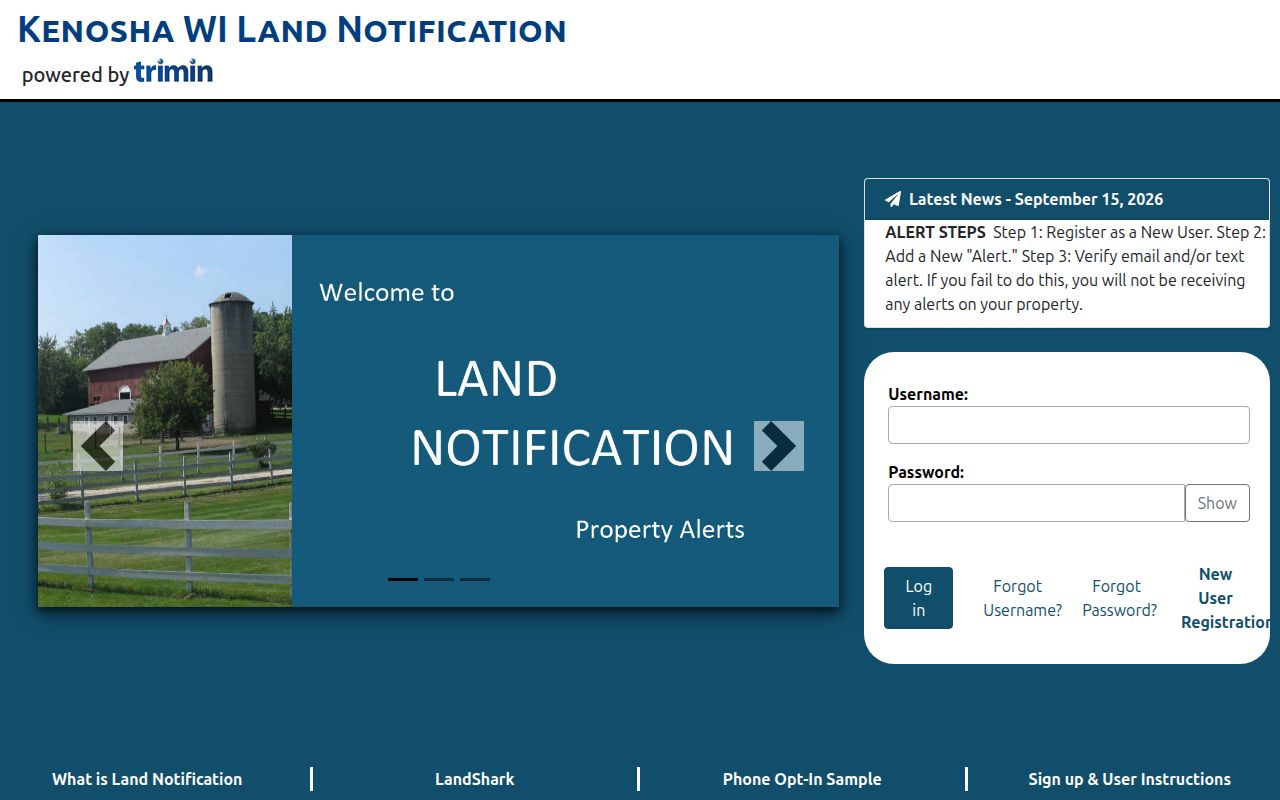
When a notice arrives, read the filing itself. Retrieve the document through LandShark or the Register of Deeds before drawing any conclusion.
Separate Kenosha County Deed Records from Court Dockets
A foreclosure, quiet-title fight, partition, or lien enforcement starts life in court. A lis pendens, judgment, or release may then get recorded with the Register of Deeds. Wisconsin Circuit Court Access shows public case summaries. The Clerk of Circuit Court keeps the full paper file and issues certified copies. A docket and a recorded land instrument answer different questions. Use both when a dispute is in play.
The county sheriff-sale portal shows filing number, defendant, parcel, address, status, and opening bid. When a listing appears, follow the filing in WCCA. Then confirm the related recorded documents. Sealed, juvenile, adoption, and other protected material never appears in public summaries. Even a decided case does not guarantee that a parcel's current title is clean.
Sales are held Wednesdays at 9:30 a.m. They take place in the Public Safety Building lobby, 1000 55th Street, per the Sheriff's Office. A listed matter may be postponed or canceled as its status shifts. A defendant name or case number is the right clue for the docket. The property tax key and recording reference are the clues for parcel and deed research. Keep those identifiers straight as you move among the sheriff, court, and land-record systems.
The county Clerk of Courts page links to Wisconsin Circuit Court Access. That makes it a natural spot for public case lookup. It is a practical starting point whenever a Kenosha County deed search raises a foreclosure or civil-case question.
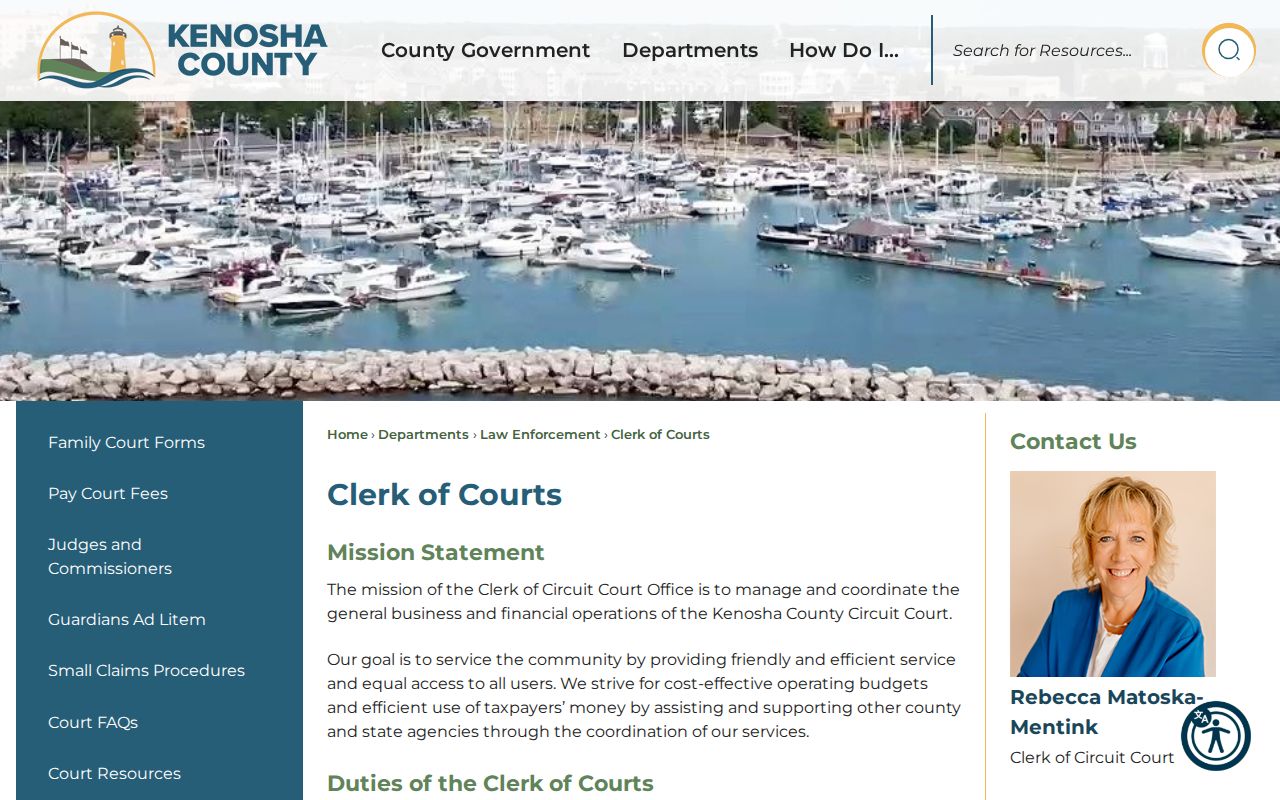
Give the Clerk a case number from the public summary when asking about the file. Give the Register of Deeds the recording reference when asking for a land instrument.
Older Kenosha County Deed Records Need an Office Check
Kenosha County was organized in 1850. Its records landscape holds nineteenth-century deed books and indexes. Later plats, surveys, and digital images sit alongside them. The earliest book year, the LandShark cutoff, and any imaging conversion date are not published. No courthouse fire or catastrophic county land-record loss is on record either. So treat the historical reach of the digital index as unknown. Do not assume a gap or a full run.
For an older chain of title, ask the Register of Deeds which books or indexes exist. Ask whether a counter lookup is required. Land Information keeps the county survey repository in eDocs. The GIS viewer layers surveys and subdivisions for map context. FamilySearch and the Wisconsin Historical Society are worthwhile historical leads. The exact Kenosha deed-book film range is unconfirmed, though.
Request a Kenosha County Deed Copy with a Good Reference
Try LandShark first when the document is findable online. For a counter or mail request, hand over the recording reference if you have it. Without one, supply the owner, property address, and legal description together. The county's copy form accepts those clues and lists copy, search-assistance, and certification charges separately. Call the Register of Deeds at 262-653-2441 to confirm the form and the current fee. Ask whether a certified copy is possible.
A precise request keeps the search from stalling. It rules out a same-name owner or a nearby parcel. If the record predates the online index, ask staff for help. Have them identify the older volume or index path. Don't guess a book range. Save the returned reference. It lets you match the same document against Property Inquiry and the mapped parcel later.
Recorded, not guaranteed. Kenosha County deed records show instruments on file, but an index search is not a title opinion. A title professional can review the chain and other interests that a quick public lookup may not reveal.