
Follow the Kenosha County Route to Who Owns a Property
The shortest path starts with an address in Property Inquiry. The result links the location to a tax key and an owner display. Take that key into the county's deed index. Pull the most recent conveyance. A freshly recorded deed is the stronger confirmation when a sale just closed. Interactive Mapping can also plot the parcel on a GIS map. It is handy for location. It does not certify ownership or the legal line, though. Treat it as context rather than authority.
- Enter the full street address in Property Inquiry and note the tax key.
- Compare the displayed owner and mailing address with the parcel's situs.
- Use LandShark to confirm the latest deed parties and legal description.
- Check the municipality and parcel location in Interactive Mapping.
- If the public name-search field is unclear, ask Land Information staff to locate the key from the tax-bill spelling and street.
These steps answer ownership as the public records state it. They do not settle possession, fix a boundary, or promise that a deed chain is free of competing claims.
Owner Names in Kenosha County Need a Parcel Match
When only a name and street are known, the county FAQ offers a staff-assisted path. Land Information staff can take the owner name as printed on the tax bill. Staff can then locate the matching tax key. The public Property Inquiry landing page does not confirm guest owner-name searching. So do not assume a name-only portal route exists. Once a key surfaces, check the address and municipality. Only then accept the returned owner as the intended match. For an address-specific question, the tax key is the bridge. It links that staff-assisted name search to the recorded deed in the deed records. Keep the address and municipality attached to the key. That habit prevents costly mix-ups. A similar name elsewhere in the county could otherwise be taken for the same owner of record. Same-name individuals, trusts, estates, and limited-liability companies can all muddy a name search. A corporate name can be run through one more tool. The Wisconsin Department of Financial Institutions Corporate Records Search covers it. An entity filing alone proves nothing about land, though. The deed and legal description are what tie a named party to the parcel.
Compare Sources to Find Who Owns a Kenosha County Property
Several records can name an owner. They serve different jobs. Property Inquiry shows a tax-roll owner and links the parcel to its tax key, LandShark holds the recorded instruments, GIS locates the parcel, and a probate case can explain a transfer through an estate. Compare dates and legal descriptions instead of treating every name as a live statement of ownership.
| Source | Owner Info It Gives | Access |
|---|---|---|
| Property Inquiry | Tax-roll owner display, key, assessment, sales and tax data | County guest search |
| LandShark | Recorded deed parties and land instruments | Register of Deeds portal or office |
| Interactive Mapping | Parcel geometry and map context | County GIS viewer |
| Probate file | Estate case and transfer context where applicable | WCCA summary and clerk file |
For a recent conveyance, the latest recorded deed is the strongest public check. The assessor roll is the practical display of the tax-billed owner. The county publishes no typical deed-to-roll update delay. Its nightly update note concerns parcel-number changes only. When timing matters, note the deed date and the date the tax card was viewed. For a direct who-owns-this-property lookup, use two dated displays. Set the latest deed's grantee beside the dated tax-roll owner display. Confirm both describe the same legal parcel. Keep the source and date beside every name. Property Inquiry is built around parcels and tax information, while LandShark is the recorded-document path. GIS supplies location context. A parcel polygon cannot say who occupies a home. A case summary may explain a court-authorized transfer without showing the full instrument. If the sources disagree, preserve the differences. Ask the office that maintains the relevant record instead of blending the names into one answer.
Property Inquiry Starts the Search for Who Owns a Kenosha County Property
Property Inquiry is the public gateway to tax bills, assessment, sales, and building data. Its December 2024 update added guest access by address or parcel, plus a Taxes tab for current and delinquent amounts. The portal's public landing page does not confirm a guest owner-name search. Treat the tax-roll owner display as a dated record. Verify the person or entity in the latest recorded deed before relying on it. The Property Inquiry guest entry opens the county parcel system. The official access screen displays the sign-in options before any parcel card appears.
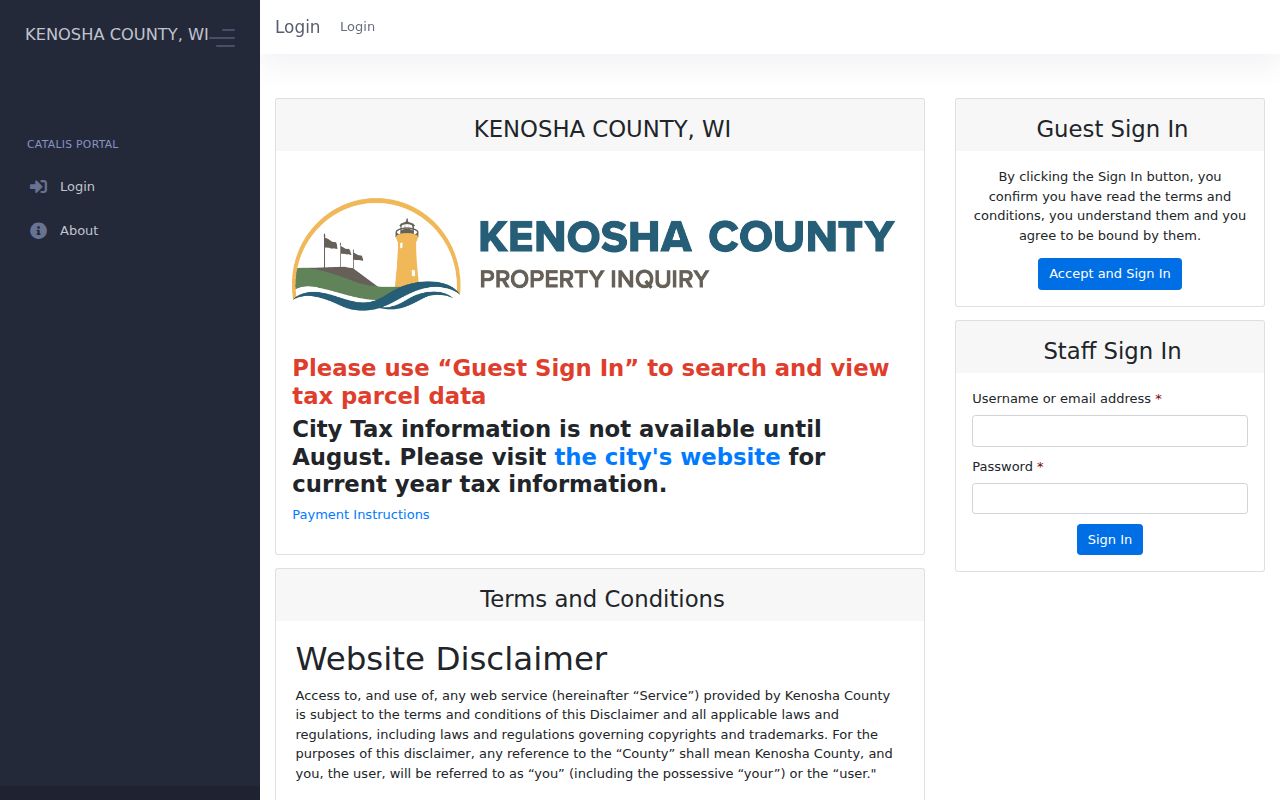
Start with the tax key and municipality from the parcel result. Those two details connect the deed search and the map to the same land. A name can clash with a recent closing statement. In that case, look at the recorded instrument first. Do not assume bad title. LandShark serves as the public online access point for recorded documents. However, its search fields and historical coverage are not published in detail. The Register of Deeds can tell you whether a copy request fits your case. It can also advise on a manual index search. When asking, identify the parcel, the parties, and the legal description.
The guest-sign-in upgrade was announced on December 12, 2024. Address and parcel searches work without the owner-name route. The Taxes tab lists current and delinquent amounts. But a tax balance is not a complete title history. For an unfamiliar result, note the key. Then head back to the deed index with the land description. Do this before settling on an owner of record.
Separate the Kenosha County Situs and Mailing Address
The situs address tells where a parcel sits. The mailing address is where a tax notice goes. Kenosha County's FAQ cautions that an outdated mailing destination can delay important notices. A mailing address outside the county does not strip the recipient of any interest. Likewise, the situs city is not always the municipal assessor serving the parcel.
Treat the mailing field as a contact clue. Then confirm the owner of record and land description through the recorded deed. If a tax notice keeps going to an old address, contact the treasurer or assessor named for the parcel. Ask how to update the tax mailing record.
A notice sent outside Kenosha County is not proof the owner or parcel has left. The situs, municipality, and assessor assignment identify which local tax roll applies. The notice address only shows where correspondence is routed. Keep both details handy when chasing a missing tax bill with the treasurer. Or ask an assessor to correct the mailing destination.
Trusts, LLCs and Estates Can Own Kenosha County Land
An owner on the Kenosha County roll can be a person, trust, business entity, or estate. Search with the exact vesting name on the deed rather than a brand name. An estate transfer may appear in a probate docket. It may also appear in an instrument recorded with the Register of Deeds. Wisconsin DFI records can clarify an entity and its filing status. They never replace the deed.
When a trust or company holds title, compare the full legal name. Also check the signing capacity and the parcel description. For an estate, WCCA may show a case summary. The Clerk of Circuit Court keeps the file itself. A death certificate is not a title document. A court order may need to be recorded before a land transfer reads clearly.
A Recent Kenosha County Transfer Can Outrun the Tax Roll
The county's public guidance lists no standard lag between deed recording and a new owner appearing on the tax roll. Property Inquiry does update nightly for parcel-number changes. That parcel schedule is no promise of overnight ownership updates. If a sale just closed, search LandShark for the recorded deed. Then compare its date with the current Property Inquiry result.
Match the recorded grantee and legal description to confirm the parcel. If the tax roll still names the prior owner, contact the assessor. The recorded instrument answers what was filed. The tax roll may follow a different update cycle.
What a Kenosha County Owner Lookup Cannot Prove
What can an owner lookup actually prove? Less than most people expect. A recorded deed names a grantee. The tax roll lists the person billed. Yet neither promises the file is complete. Some interests never reach the recorder, and later documents can surface after any search. A GIS map line is not a survey. An assessment card is not a title report. A company filing may list an entity's registered details while saying nothing about its holdings. For a legal ownership conclusion, rely on the recorded deed and a professional title search.
Lawful use. Use ownership information for property research, estate work, tax questions and civic review. Do not use a name or address to threaten, follow or harass a person.